Know Any Literary Animal Lovers?

Hi there PureJeevan readers! We wanted to let you know that Jim's new novel CHROO is available on Amazon. It's a crazy adventure involving a billionaire heiress, her Chihuahua BFF ("Chroo") and a host of human and animal characters. Find out more on Amazon! Here are some links:
Some of you who are new to raw foods may be happy to learn that there are festivals for individuals interested in the raw foods lifestyle! They are a fantastic opportunity to meet like-minded friends. For those of you who attended the Raw Spirit Festival in 2008, seeing images from that event may stir the magical memories you collected while there.
Below is part one of a two-part guest piece by Rawbin Anderson, in which she recounts her 2008 Raw Spirit Festival J.O.B. experiences of working in the kitchen. Rawbin is now the Raw Spirit Festival East Coast Manager and can be reached at Rawbin [at] rawspirit.com.
?
Read more: A J.O.B. (Joy of Being) at the Raw Spirit Festival (Part 1 of 2)

What's Valentine's Day without a little "Smooth Love," right ??Here's how we created this simple, creamy delicious, smoothie:
- Start with the water and flesh of one young coconut. We had one left over, still nice and fresh, from our recent trip to the Florida Keys (more raw food videos and posts coming soon from that trip!).
- Add three to four oranges, peeled (and de-seeded if necessary)
- Add two to three large bananas
- Add 12 ounces of frozen strawberries (or to taste)
- Add a small handful of raw almonds
- Add a bit of raw agave nectar or a few dates, if you have them.
Blend in your high-speed blender until smooth ... and share with a loved one! Happy Valentines Day, everyone!
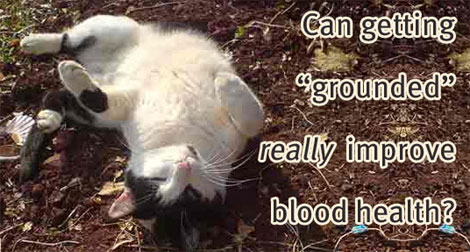
Jim here... A week or two ago, there were some videos floating around in raw food circles that seemed to indicate that one's blood health (and, by extension, one's overall health) can be quickly and dramatically improved through a practice known as grounding. I realize that, metaphorically, people commonly use the term "grounded" to indicate a kind of level-headedness -- e.g., a "down to earth" attitude. But, in the literal sense, it's an electrical term used to describe a physical connection to the earth. I'm no engineer, but my understanding is that these connections basically discharge things or people from any static electricity build-up (as in those bracelets that computer repair techs wear), or serve as a conduit through which other electricity may pass (as in lightning rods).
 That the idea of "grounding oneself" should take root so strongly in natural health circles is unsurprising. In theory, it seems to make a lot of sense. I'm just as intrigued by it as the next person, I suppose. If we spend most of our lives wearing rubber-souled shoes, walking on shag-carpeting, sitting suspended off the ground on static-filled things like couches and office chairs, often running various electrical equipment, basking in EMFs from radio waves and Dish-network signals and cell phone radiation... sure, it makes sense that we're probably all experiencing some heretofore unprecedented (evolutionarily speaking) human body exposure to significant electrical phenomena. My car reminds me of this daily with a (friggin' annoying!) shock each time I get out and close the door. But, as the "double-rainbow guy" so succinctly put it: ?What does it mean
Jim here... Yesterday, Wendi toughed it out and typed up a lengthy health update (a painful process for her -- trust me!). So, for the rest of this week, I'm going to fill in here (letting her get back to her resting and healing) and share a few interesting stories related to this Lyme adventure. But first, I wanted to add that today brought some great improvements in Wendi's condition. She was able to do a physical movement (wrapping a towel around her head) without pain for the first time in months. So, we really think those antibiotics are starting to kick in.
Today's topic is intuitive eating. I'm certain we've covered this many times on the blog here. So, rather than explain what it is again, I'll just share an intresting example. Basically, while dealing with these Lyme symptoms, Wendi experienced a serious craving for olives.

I started jumping up and down last night with excitement when I received a call saying that the bellydancing class I've been wanting to take at Khafif Studios has an opening! Yay!!!

(This will be my teacher, Berna!)
 What fun it is to share a fun day with like-minded people at a special location, sharing good times, laughter, and delicious, nutritious raw food wonderment. Here are some pics from our outing -- hopefully the first of many such unique outings blending the Pittsburgh raw group with the D.C. one.
We hope this also provides some inspiration for other meetup groups to consider holding joint meetups in some geographically central location.
If you're new to raw foods, you're probably aware that eating this way isn't exactly mainstream. And, while we've talked here before about the importance of connecting with others for inspiration and support, it's true that a lot of that lends itself to participation in virtual worlds such as Twitter, Facebook, Give It to Me Raw, and other communities, blogs, and sites where raw foodies hang out.
Aren't these videos wonderful? Today we have yet another special Raw Spirit interview for you -- the mega-talented Markus Rothkranz. What can I say about Markus? He's a true inspiration, a man who truly lives by his heart and inspires thousands of others on a daily basis. He's actually very tough to interview because he's so interesting and self-actualized, you really just want to hang and chat with him (but then you remember that you're on film and you should probably get back to asking questions that people will appreciate).
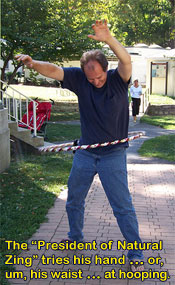
Wow, what a strange episode we have for you tonight! As you'll see, it was a really bizarre day here at Pure Jeevan. Wendi's out of town with her friends Rawbin and Jeff (owner of NaturalZing) helping NaturalZing with their booth at the Green Festival in Washington, DC. Too bad she's away; she missed opening the mail today and seeing a highly unusual letter from the Department of Homeland Security! The topic? Well, it turns out Pure Jeevan is under governmental surveillance -- and our chief surveillor, one "Larry Ferguson," actually decided to introduce himself and make some comments about our Bananas episode (which we hadn't even released yet!). Sounds highly unusual, I know. But, he was actually doing us a favor. Take a look (vid shows me reading part of his letter, then the banana episode proper):
As you heard, Larry writes: "I believe your viewers deserve to know, for example, that bananas have roughly 100 calories each, are high in Vitamin C, and fiber. You might also want to mention that they contain considerable levels of B6, which is good for metabolic functions as well as nervous and immune systems. B6 also helps you produce antibodies to fight diseases and plays a strong role in brain function and even maintaining hormonal balance. Your body can't store B6, btw, so you need to get it every day. Of course, most people will know already about the great potassium levels in bananas. Potassium is great for controlling blood pressure and certainly reduces risks of heart problems. Bananas also contain manganese, which your viewers probably already know about after your persimmons video."


Welcome to Day One of "Dressings Week" here on Pure Jeevan. After finding out that KDcat took it upon herself to film a segment of "Makin' It Monday, Guest Raw Chef Edition," I decided that we should probably spend an entire *week* focusing on salad dressings.
Read more: Makin' It Monday Guest Raw Chef Edition: KDcat Makes Orange Pepper Cilantro Dressing
Just a quick update for those in the Pittsburgh area:
My dear friend Melissa has planned some fun raw food gatherings that you may be interested in checking out. The first is a raw food dinner and demo, the second is a wild herb walk.
Raw Foods Demo and Dinner?

 Day 8:
Let's focus on creativity for a bit. This is an area where many men have been comfortable expressing a feminine quality, especially when done through art and music. I say many, because we all know at least a few men who were raised to believe that a strong, powerful man doesn't spend his time with such frivolous things. Instead, he works hard to earn an income to support his family. In the past, and still sometimes today, creative men were viewed as weaker and less masculine, not practical and in control. The feminine quality of creativity was, however, encouraged in women who were afforded more time for such "frivolity."