Know Any Literary Animal Lovers?

Hi there PureJeevan readers! We wanted to let you know that Jim's new novel CHROO is available on Amazon. It's a crazy adventure involving a billionaire heiress, her Chihuahua BFF ("Chroo") and a host of human and animal characters. Find out more on Amazon! Here are some links:

Jim here... Back in November of 2010, my friends Joe Prostko, Heather Harris, and I decided to replicate an unusual experiment we'd heard about. Reportedly, some people with health issues had found improvement in their live blood samples after simply grounding themselves for a period of time. We all thought it was interesting enough to try on ourselves, so the above video is the result. ?Since it's 8+ minutes long, I'll spare you any suspense: The results were absolutely inconclusive. (However, we did have fun with it, as you'll see.)
NOTE: The site I'd posted the video on, BlipTV, seems to have gone out of business. Will have to see if I can find the video again and post on youtube.
Read more: Strange Grounding / Blood Experiment -- Inconclusive

We're here to inspire you...that's our overall focus here at Pure Jeevan. So, when we ask you what you'd like us to do more of, less of, or to consider doing here on the blog ... we take your responses to heart. Of course, it's impossible to please every single person since we all have different personalities and needs. However, we'll always do our best to create a balance in order to inspire as many individuals as possible.
Below are suggestions for what some of you'd like to see happening here on the blog, along with some responses from us. If you have more suggestions, please send them our way anytime. We read everything that comes in and will always give your suggestions serious consideration.
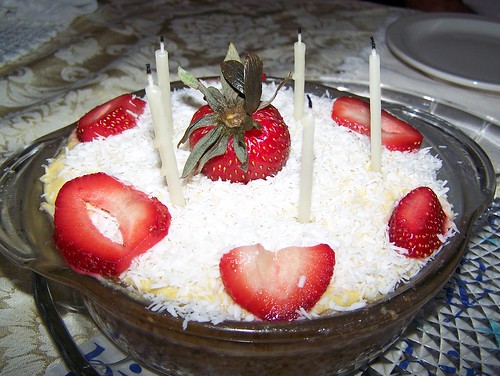
What better way to start our Fun-Filled Friday than by celebrating Jim's birthday ! He worked for half the day and now he's home for a long weekend. So far we've had a nice lunch (cashew/macadamia cheese with red peppers and celery) and birthday pie (mango and pineapple!) after singing "Happy Birthday" to him! This evening we'll have veggie stir-not-fry, since that's what Jim has requested. I prepared it earlier and it's in the dehydrator to marinade and get a bit warm.
I thought I'd put another fun week together here at Pure Jeevan while Wendi is away (although, actually, ALL of our weeks are fun-filled here!). This week, I thought I'd discuss herbs, spices, and essential oils. Of course, I can't cover those enormously important (and huge) subjects in-depth over the course of just one week, so I created that little banner (above) so that we can re-use it from time to time.
Herbs are fascinating, aren't they? Sometimes, you don't even consciously know why you use the ones you do but, invariably, there's a reason. Sure, sometimes recipes call for a specific flavor. But, often, there are other reasons as well -- such as to support digestion, or to provide a warming or cooling sensaiton. This type of thing is critical in ayurvedic principles, as we touched on recently on this blog, where the spices could be present for digestive or medicinal purposes, or of course as a preservative.

Today we'd like to introduce you to one of the sweetest, most creative, and passionate raw foodists we know. She's petite, pretty, pleasant, powerful! She continually shares her knowledge about the raw food lifestyle with others and educates many individuals about our human rights when it comes to the foods we grow and consume. She's up on the latest regulatory activities relating to health and diet issues going on within the US government, and speaks out when our rights are in jeopardy of being taken away.
Take the Time to Meet... Rhio!
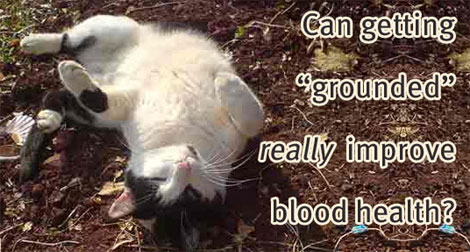
Jim here... A week or two ago, there were some videos floating around in raw food circles that seemed to indicate that one's blood health (and, by extension, one's overall health) can be quickly and dramatically improved through a practice known as grounding. I realize that, metaphorically, people commonly use the term "grounded" to indicate a kind of level-headedness -- e.g., a "down to earth" attitude. But, in the literal sense, it's an electrical term used to describe a physical connection to the earth. I'm no engineer, but my understanding is that these connections basically discharge things or people from any static electricity build-up (as in those bracelets that computer repair techs wear), or serve as a conduit through which other electricity may pass (as in lightning rods).
 That the idea of "grounding oneself" should take root so strongly in natural health circles is unsurprising. In theory, it seems to make a lot of sense. I'm just as intrigued by it as the next person, I suppose. If we spend most of our lives wearing rubber-souled shoes, walking on shag-carpeting, sitting suspended off the ground on static-filled things like couches and office chairs, often running various electrical equipment, basking in EMFs from radio waves and Dish-network signals and cell phone radiation... sure, it makes sense that we're probably all experiencing some heretofore unprecedented (evolutionarily speaking) human body exposure to significant electrical phenomena. My car reminds me of this daily with a (friggin' annoying!) shock each time I get out and close the door. But, as the "double-rainbow guy" so succinctly put it: ?What does it mean
I'm posting this at the end of a busy day, but let's see what I can call fun in just an ordinary day.
It was fun singing at the top of my lungs with KDcat in the car today--both of us over exaggerating the vocals and giggling a lot.


Rita Romano, author of the widely available book Dining in the Raw and executive chef for many years at the Hippocrates Health Institute, is a true pioneer of the raw movement. We were thrilled to have the opportunity to visit with her and her two lovely Boston Terriers, Angel and Oreo. Here's PART TWO of our talk with her:
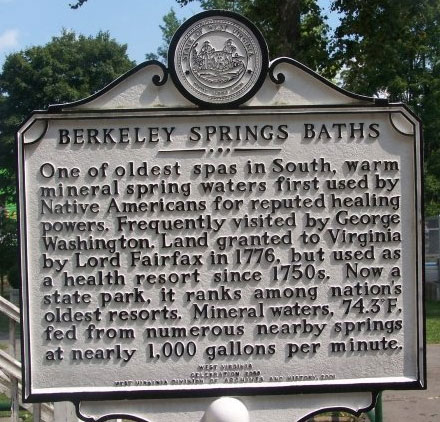
Hi everyone! ?We wanted to announce plans for a raw food picnic / potluck / meetup next Saturday, September 19th, at noon, in Berkeley Springs, WV at Berkeley Springs State Park (link to map), a wonderful natural healing destination about half-way between Pittsburgh and D.C. Wendi was just talking with Rawbin from the Capital Area (D.C.) raw food meetup and we all thought that a combo Pittsburgh / D.C. meetup might be fun. So, we all planned something right on the spot!
Berkeley Springs is a really nice (but small) public park in West Virginia about half-way between Pittsburgh and D.C.I traveled there a few weeks back with Melissa, Dave, Ella, and Bethany on the way to Raw Spririt East. We had a super time soaking in the spring water and checking out all of the cool alternative shops. (I did a write-up here on Pure Jeevan a few weeks ago and posted some video of the place).

Jim here... A few months ago, I was in our local food co-op's juice bar. I'd ordered an apple juice and had cringed when I saw the barista chop up four Granny Smiths and nonchalantly toss the whole lot, seeds and all, into the juicer. That juice was for someone else. So, when my order came up, I politely requested that he cut the seeds out -- a request he reluctantly granted, although not without showing considerable annoyance. My thinking was: Hey, those seeds contain cyanide! Why would I want to consume that, even in small amounts
 But then... Have you ever known anyone who died from eating apple seeds? ?I know I haven't. Also, after mentioning this to a few people I know, I found that a number of them regularly ingest apple seeds. And, well, they're still living. So, is there any truth to the rumors? And, should we be concerned at all about this?
Read more: Should You Juice the *Whole* Apple, Seeds and All?

Every day I receive countless emails filled with questions about the raw food diet, my own success with reducing nearly 100 pounds and regaining health, and pleas for help by many who feel like they've hit bottom and there's no way up. Some emails have me in tears, because I can completely relate to what many of you are going through. I feel your pain, frustration, desperation.
One thing I've always been good at is listening, truly listening to what others are saying (and being an empath allows me to know what some are saying, even when they many times aren't verbalizing it). Another thing I've always been good at is intuitively knowing how to help others who are asking for advice. Jim used to joke that he wanted me to go into business running an advice column because ever since he's known me, I've been the person everyone comes to for help and advice. So, when I receive so many emails asking for help, it feels natural for me to reach out and connect with those needing help. It's what I do best well, that and spreading love!