Know Any Literary Animal Lovers?

Hi there PureJeevan readers! We wanted to let you know that Jim's new novel CHROO is available on Amazon. It's a crazy adventure involving a billionaire heiress, her Chihuahua BFF ("Chroo") and a host of human and animal characters. Find out more on Amazon! Here are some links:

Welcome to Makin' It Monday, Guest Raw Chef edition. Today, Dave Sokulski of www.BirchCenter.com and www.FoodUnderFoot.com gets a little silly while making some delicious raw cacao treats! Enjoy the video:
Ketchup
1 cup sun dried tomatoes, soaked for one hour
3 small fresh tomatoes
As a follow-up to yesterday's McDonald's-bashing post, I thought I'd post another perspective -- namely, that not all chain smoothies are bad. I can't claim to have tried them all, but I can report with confidence that, for raw most foodists, a trip to Jamba Juice can be awesome!

Jim here... When you consider the agricultural and marketplace practices that affect the food we eat (e.g., pesticide use in the fields, widespread irradiation afterward, and the contamination of produce from various sources -- not to mention some of the disturbing potentialities we face in terms of further governmental intervention into the food chain), it leads one to the conclusion that, if we really want to eat the best food ever, growing it yourself is a great solution. It's also cheaper to grow your own and, in my opinion, more fulfilling than purchasing it (if you have the time and space to manage it, that is).
With all of these concerns (and more) in mind, we've launched a new series of interviews called "Know the Growers" in which I'll be interviewing organic farmers around the world on best practices in the field. Initially, we'll be publishing them every few weeks, most likely. Once we sell our home and are "full-time Pure Jeevan karma yogis," we'll be publishing them weekly (along with resuming our daily video series Know Your Food). I'll be publishing these organic farming interview transcripts on NaturalNews.com under their Citizen Journalist program.
Read more: Pure Jeevan Launches Natural News Interview Series Focusing on Organic Farming
Recently, the wife of a friend of ours decided that she wanted to lose 20-25 pounds. As far as we know, she follows pretty much a "Standard American Diet." We've heard that she doesn't care for red meat, but she does eat other meats, plus a good deal of dairy (which, we believe, she regards as a healthy food choice). She's apparently tried a number of exercise regimens, and a few fad diets, with no luck on losing these 20-25 pounds. (Frankly, we haven't seen her many times, but would not have guessed that she had 25 pounds to lose. But, we'll save "self image" as a topic for for further posts.) In any case... Frustrated, she decided to see a hypnotist!
Our friend accompanied his wife to the initial consultation. He said it was actually interesting. The hypnotist basically sits you down and walks you through some fundamental psychology, demonstrates a few of the primary principles of suggestion (e.g., showing you how easy it is to, say, imagine the sourness you would experience when biting into a slice of lemon), and then lays out how the program works.

Jim here with another Weird Wednesday.
Recently, at the store, I came across a little plastic tool, priced at $1.49. It was an orange peeler. I'd never heard of such a thing. As someone who eats about 20 oranges/week, I was intrigued. Do you mean to tell me, I thought, that my days of laboriously de-skinning oranges would disappear (those trips to the company bathroom to remove the orange pulp from my fingernails!)?
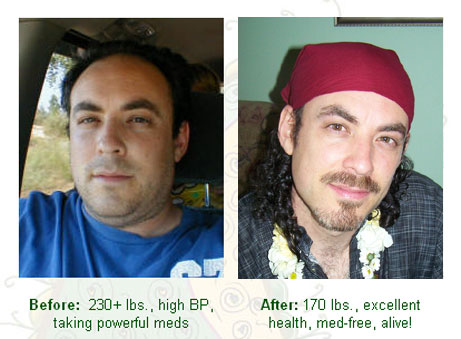
Jim here... Sorry for being away for so long. We've got SO much going on these days, it's mind-boggling! More on that later, as I have something in mind already for today...I should start by clarifying that I've been basically raw for almost 4 years now (high-raw, you might say). During the first nearly-two years, I still ate meat from time to time. Actually, I still ate (and drank) almost everything from time to time -- sugars, processed foods, alcohol, you name it -- only less than I did before, and within the context of a dietary intake consisting of a significantly higher percentage of living foods. In those early years, I'd estimate I was averaging 75-90% raw. Not bad ... I definitely experienced improvements in my health!
 The big change in consciousness didn't follow until two years ago. (This is an interesting point because, as you can see, I wasn't "ready" for a bigger change for two years into eating a lot of raw foods!) I suppose the difference was that, during the early years, I was pretty much raw by default rather than by conscious decision. As Jules said in Pulp Fiction, "... my girlfriend's a vegetarian. ?Which more or less makes me a vegetarian..." Yeah, that was my case back then, too, although I certainly grew into it (and am thankful that I did).
Read more: Reflecting on Two Years of an Exclusively Raw Die

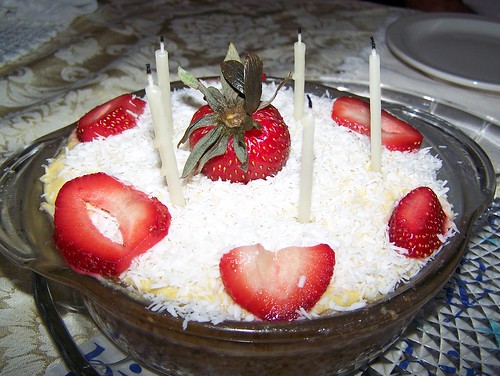
What better way to start our Fun-Filled Friday than by celebrating Jim's birthday ! He worked for half the day and now he's home for a long weekend. So far we've had a nice lunch (cashew/macadamia cheese with red peppers and celery) and birthday pie (mango and pineapple!) after singing "Happy Birthday" to him! This evening we'll have veggie stir-not-fry, since that's what Jim has requested. I prepared it earlier and it's in the dehydrator to marinade and get a bit warm.

To help keep all of you inspired, we ve asked some
remarkable individuals to share their raw food stories with you. Enjoy!
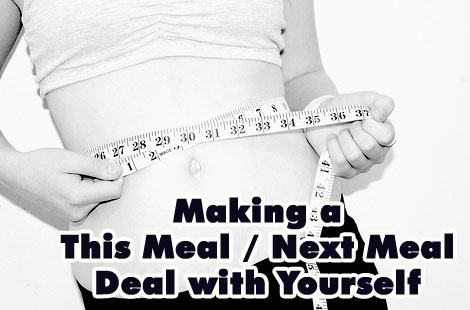
Wow, could this really mark 800 raw food blog posts ! ?We must be obsessive orthorexic raw foodies to have achieved that level of focused health editorial journalism! Post #800 deserves to be something really useful (not that the others aren't or do not deserve this), so we'd like to pass along a fun idea. I guess all of that talk of Donald Trump yesterday got me thinking about making deals. We make deals with others, of course, but I think we also sometimes can make them with ourselves.
I'm so glad to be out of the corporate business world these days, but I did pay attention while there, and perhaps even learned a thing or two. Today's post is related to that in a way. You see, I was once at a sales training seminar when the speaker advised following a "this job / next job" strategy with clients. What that means in business is that, when you're in the middle of one job working for someone -- say, for example, you're a printer working on a brochure for a company -- you would make a point of saying something like, "Hey, this brochure is going great. I was wondering what else is coming in the near term so that we can make sure to be ready for it."
In yesterday's installment, we talked a bit about Salem, Oregon. I inadvertently missed this video in Wendi's batch of uploads. So, here's Wendi interviewing Kerry Matson on her path to raw and some of her favorite raw foods!
Once again, we thank our trip snack sponsor, Natural Zing, for helping us to make this possible on our budget!