Know Any Literary Animal Lovers?

Hi there PureJeevan readers! We wanted to let you know that Jim's new novel CHROO is available on Amazon. It's a crazy adventure involving a billionaire heiress, her Chihuahua BFF ("Chroo") and a host of human and animal characters. Find out more on Amazon! Here are some links:

Jim here... Many people write to us asking whether we own pets and, if so, whether they are raw, too. Well, I wish I had a straight answer for you, but I think the answer is better told via a dedicated blog post.
As I'm writing this, part of me is tempted to include this post in our "My Raw Story" series. You see, Julia (pictured above) had some serious health issues just after we adopted her from a local rescue shelter, and we're still relatively early-on in our attempt to understand and reverse these issues.
I'm still sticking with my mono meal eating for Navratri. It's not as easy as I thought it would be, probably because I thought I wouldn't have any problems at all. Anyway, I'm sticking to it and we'll see if it makes me feel more energetic and healthy after the nine days are completed.
April 11, 2008

As many of you know, I'm more of an intuitive eater than anything else. I eat what I intuitively feel my body needs most of the time. Well, for the past two weeks what my body has been asking for is cauliflower. I went through a cauliflower stage sometime last year, and it seems I'm back to eating that lovely white flower veggie again!
At first I was making mashed cauliflower (like? mashed potatoes) and keeping the recipe very simple. I've made complex versions of the mashed cauliflower before, but I was really drawn to a more simple taste so all I was adding was some olive oil, salt, and a tiny bit of macadamia nuts. Yesterday, however, as I was cleaning the cauliflower (since my body was telling me it wanted more of it), I had a sense that I wanted something more vibrant, more fun than simple mashed cauliflower. So, I followed my intuition (picking up whatever I felt my body wanted to eat with the cauliflower) and here's what I created...

Jim here... I thought it might be interesting to spend the rest of this week looking at some quotations we've come across that discuss obesity entirely outside of the context of diet. ?While these quotes focus on obesity, it's likely (in my opinion) that the authors' intentions pertain to almost any health challenge (obesity or otherwise).
Today, we're going to quote a well-known author, Marion Woodman. Tomorrow, we'll hear from Rhonda Byrne, Thursday Dr. Gabriel Cousens, and Friday I'll recap with something I posted on Facebook a while back from Tony Robbins.It should be an interesting week -- and, by the way, I'll tie all of this back into raw foods on Friday, and discuss then why the raw food diet makes a lot of sense for healing obesity and other health challenges even if, as these authors imply, one's diet may not be the sole or ultimate cause of one's health challenges.
Rawbin brings healing laughter and an unusual gift to unwell Wendi Dee.
Are raw foodists invincible to the common cold? I have to admit that I kind of assumed that was the case. If it's true, at what point does the invincibility kick in? I've been raw for over three years (over two at 100%) and yet the past few days have found me overcome with sneezing, sore throat, runny nose, and fatigue.
My first thought, once my throat started to hurt, was: "Did I eat anything different recently that I'm reacting to in a negative way " But, nothing had changed.My diet is relatively clean, with the exception of the times when I consume too much nut dip. So, when the sneezing and runny nose were added to the sore throat, I knew something else was going on. I had to admit it: "I'm not invincible."

I'd like to talk with you about diet and experimenting. I've been learning about natural healing and foods/health since I was a very young woman. Somewhere along the line I knew that what I was eating was either making me feel better, or worse, and that food was related to health (it was more than just to fuel the body). It was with this knowledge that I stepped into the realm of natural healing and stumbled around for most of my life.I've learned about vegetarianism, herbs, the negative effects of dairy on the body, veganism, essential oils, Ayurveda, harmful chemicals in and around our foods, and so very much more. I don't claim to be an expert on any of these topics, they are just part of my overall bank of knowledge and experiences from which I pull to live as healthy as possible.

Jim here with a weird little story for today... I was at a business seminar early this morning and someone I know came up behind me at the buffet and said, "I'm getting in line behind you to see what you eat. You've lost weight and I want to lose weight, too."
"Well, it's no secret," I replied. "Just chow down on all of this great fruit they have." (I'd already piled my plate high with honeydew, cantaloupe, pineapple, and strawberries.)

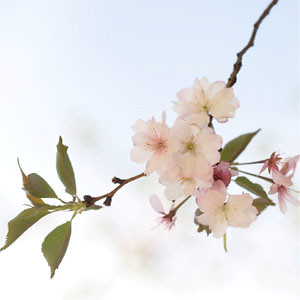
Every Autumn I proclaim that it is surely the best season of all. Then, without fail, every Spring I find myself feeling and saying the same thing. How can any season be better than this time of renewal, rebirth, and unlimited potential for beauty to spring up in front of your eyes with every glance?

We now have two more raw food snack companies sharing some of their goodies for the retreat gift baskets! A special thank you go out to:
[Sorry, we lost the pic in a web update... will repost if we find it!]
Last night, Jim ate the first warm food he's had in over a year! I created a dinner that was placed in the dehydrator for about an hour before it was served. This dish is delicious at room temperature, also, but I thought it might be more special if I served it a bit warm. Jim thought it was a nice change to the colder temperatures of the smoothies he's been practically living on!
Here's the recipe, if you think you'd like to try it.
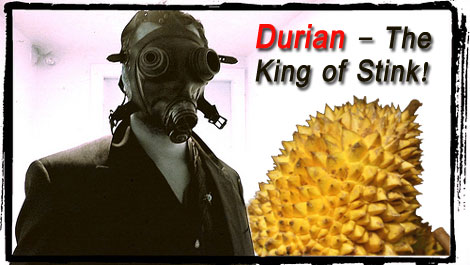
We tried it in the past, this most unusual fruit. While in Chicago recently, we decided to give it one more try! You see, the first time we tried it we were ... let's just say "not big fans" of the infamous durian. (Here's an episode of Kevin Gianni's Renegade Health Show, shot in our home, documenting that day.) It's a stinky fruit to most, although some claim to enjoy the bizarre odor (which is sometimes described as dirty sock and propane gas smell). If you can get past the smell to give it a taste, you'll be greeted by a taste as strange as the odor. Wendi describes it as a sweet onion pierogie, but each person seems to have a different opinion about this odd fruit.
In this current video our raw friend Debbie Gedayloo-Bennett, whom we met in Chicago, jumped at the opportunity to hang out for a bit of a durian experience. Debbie is on the pro-durian side of the fence that divides those who love and those who hate the alien-like fruit. Wendi was still sitting on the fence, not making up her mind after the initial taste with Kevin and Annmarie. Jim was adamantly sitting far from the love side of the fence, refusing to even attempt approaching the pro side. Debbie was a pro in opening this spiny fruit, so she agreed to open it while on video so that we could share the experience and knowledge with all of you.